Download PDF Faith Versus Fact: Why Science and Religion Are Incompatible
However, the existence of this publication has the means just how you really require the better option of the new updates. This is just what to advise for you in order to acquire the opportunities of making or producing new publication. When Faith Versus Fact: Why Science And Religion Are Incompatible turns into one that is prominent now, you should be one part of such many individuals that constantly read this book and get this as their friend.
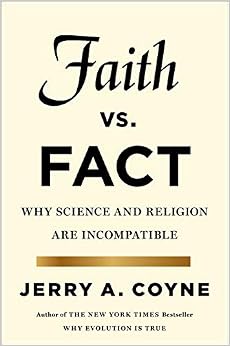
Faith Versus Fact: Why Science and Religion Are Incompatible

Download PDF Faith Versus Fact: Why Science and Religion Are Incompatible
Now, invite guide vendor that will certainly become the most effective seller book today. This is it book. You may not really feel that you are not accustomed to this publication, may you? Yeah, practically everybody knows about this publication. It will also go through exactly how guide is really given. When you could make the opportunity of the book with the good one, you can choose it based upon the factor and recommendation of exactly how guide will certainly be.
This publication Faith Versus Fact: Why Science And Religion Are Incompatible deals you far better of life that could produce the high quality of the life more vibrant. This Faith Versus Fact: Why Science And Religion Are Incompatible is just what the people currently require. You are right here and also you might be exact as well as sure to obtain this book Faith Versus Fact: Why Science And Religion Are Incompatible Never ever question to obtain it also this is simply a book. You can get this publication Faith Versus Fact: Why Science And Religion Are Incompatible as one of your collections. However, not the compilation to show in your bookshelves. This is a priceless book to be reviewing collection.
Don't bother if you don't have sufficient time to visit guide store and also search for the preferred book to check out. Nowadays, the online publication Faith Versus Fact: Why Science And Religion Are Incompatible is involving provide simplicity of reviewing habit. You might not have to go outdoors to look guide Faith Versus Fact: Why Science And Religion Are Incompatible Searching and also downloading guide qualify Faith Versus Fact: Why Science And Religion Are Incompatible in this post will certainly offer you much better option. Yeah, online book Faith Versus Fact: Why Science And Religion Are Incompatible is a kind of digital book that you can enter the link download given.
Improving the life ability as well as quality will make you feel better as well as to get it, it's sometime difficult. Yet, by reading, it can be among the wise methods to overcome it. That's' what always think to see exactly how certain publication as Faith Versus Fact: Why Science And Religion Are Incompatible could come forward to make your life better. When you have different thing to bear in mind or discover, you can find various other book title in this website, as well.
Review
“Timely and important. Jerry Coyne expertly exposes the incoherence of the increasingly popular belief that you can have it both ways: that God (or something God-ish, God-like, or God-oid) sort-of exists; that miracles kind-of happen; and that the truthiness of dogma is somewhat-a-little-bit-more-or-less-who’s-to-say-it-isn’t like the truths of science and reason.” —Steven Pinker, Johnstone Family Professor of Psychology, Harvard University; author of The Better Angels of Our Nature “[N]one make the case for the final divorce of religion and science, with permanent restraining orders against harassment and stalking of science by religion, better than Coyne.”—Ray Olson, Booklist (starred review)“An important book that deserves an open-minded readership.”—Kirkus Reviews “Many people are confused about science—about what it is, how it is practiced, and why it is the most powerful method for understanding ourselves and the universe that our species has ever devised. In Faith vs. Fact, Coyne has written a wonderful primer on what it means to think scientifically, showing that the honest doubts of science are better—and more noble—than the false certainties of religion. This is a profound and lovely book. It should be required reading at every college on earth.” —Sam Harris, author of The End of Faith, The Moral Landscape, and Waking Up “The distinguished geneticist Jerry Coyne trains his formidable intellectual firepower on religious faith, and it’s hard to see how any reasonable person can resist the conclusions of his superbly argued book. Though religion will live on in the minds of the unlettered, in educated circles faith is entering its death throes. Symptomatic of its terminal desperation are the ‘apophatic’ pretensions of ‘sophisticated theologians,’ for whose empty obscurantism Coyne reserves his most devastating sallies. Read this book and recommend it to two friends.” —Richard Dawkins, author of The God Delusion Praise for Why Evolution is True “Outstandingly good . . . Coyne’s knowledge of evolutionary biology is prodigious, his deployment of it as masterful as his touch is light.” —Richard Dawkins, The Times Literary Supplement “Coyne is as graceful a stylist and as clear a scientific explainer as Darwin himself (no mean feat) . . . one of the best single-volume introductions to evolutionary theory ever.” —Wired “The joy Coyne takes in his work is evident on every page, whether he’s offering a bone-by-bone analysis of how dinosaurs evolved into birds or describing how docile Japanese honeybees have come up with their particularly incendiary defense against marauding giant hornets.” —San Francisco Chronicle “[Coyne] makes an unassailable case.” —New York Times “In nine crisp chapters . . . the respected evolutionary biologist lays out an airtight case that Earth is unspeakably old and that new species evolve from previous ones.” —Boston Globe “Coyne’s book is the best general explication of evolution that I know of and deserves its success as a best seller.” —R.C. Lewontin, New York Review of Books “I recommend that Mr. Coyne’s insightful and withering assessment of evolutionary studies of human psychology and behavior be taped to the bathroom mirrors of all those (perhaps especially journalists) inclined to be swept into excited announcements of What Evolution Shows About Us.” —Philip Kitcher, The Wall Street Journal “With logic and clarity, Coyne presents the vast trove of scientific evidence that supports Darwin's theory.” —Cleveland Plain Dealer “It’s always a pleasure to tell people about a wonderful book, especially when the subject of the book is of universal and critical importance. Evolutionary geneticist Jerry A. Coyne has given us such a book. . . . A book that may change the way you look at things—if you dare.” —The Huffington Post “In this 200th anniversary year of Darwin’s birth, Why Evolution is True ranks among the best new titles flooding bookstores.” —Christian Science Monitor “Why Evolution is True is the book I was hoping would be written someday: an engaging and accessible account of one of the most important ideas ever conceived by mankind. The book is a stunning achievement, written by one of the world's leading evolutionary biologists. Coyne has produced a classic—whether you are an expert or novice in science, a friend or foe of evolutionary biology, reading Why Evolution is True is bound to be an enlightening experience.” —Neil Shubin, author of Your Inner Fish “Jerry Coyne has long been one of the world's most skillful defenders of evolutionary science in the face of religious obscurantism. In Why Evolution is True, he has produced an indispensable book: the single, accessible volume that makes the case for evolution. But Coyne has delivered much more than the latest volley in our "culture war"; he has given us an utterly fascinating, lucid, and beautifully written account of our place in the natural world. If you want to better understand your kinship with the rest of life, this book is the place to start.” —Sam Harris, founder of the Reason Project and author of the New York Times best sellers The End of Faith and Letter to a Christian Nation “Scientists don't use the word 'true' lightly, but in this lively and engrossing book, Jerry Coyne shows why biologists are happy to use it when it comes to evolution. Evolution is 'true' not because the experts say it is, nor because some worldview demands it, but because the evidence overwhelmingly supports it. There are many superb books on evolution, but this one is superb in a new way — it explains out the latest evidence for evolution lucidly, thoroughly, and with devastating effectiveness.” —Steven Pinker, Harvard University, and author of The Stuff of Thought: Language as a Window into Human Nature “For anyone who wishes a clear, well-written explanation of evolution by one of the foremost scientists working on the subject, Why Evolution is True should be your choice.” —E. O. Wilson, author of The Social Conquest of Earth and Letters to a Young Scientist “I once wrote that anybody who didn't believe in evolution must be stupid, insane, or ignorant, and I was then careful to add that ignorance is no crime. I should now update my statement. Anybody who doesn't believe in evolution is stupid, insane, or hasn't read Jerry Coyne. I defy any reasonable person to read this marvellous book and still take seriously the "breathtaking inanity" that is intelligent design "theory" or its country cousin, young earth creationism.” —Richard Dawkins, author of The God Delusion
Read more
About the Author
Jerry A. Coyne is professor emeritus at the University of Chicago in the Department of Ecology and Evolution, where he specialized in evolutionary genetics. His New York Times bestseller, Why Evolution Is True, was one of Newsweek’s “50 Books for Our Times” in 2010.
Read more
See all Editorial Reviews
Product details
Hardcover: 336 pages
Publisher: Viking; First Edition edition (May 19, 2015)
Language: English
ISBN-10: 0670026530
ISBN-13: 978-0670026531
Product Dimensions:
6.4 x 1.1 x 9.3 inches
Shipping Weight: 15.2 ounces (View shipping rates and policies)
Average Customer Review:
4.4 out of 5 stars
249 customer reviews
Amazon Best Sellers Rank:
#239,357 in Books (See Top 100 in Books)
Despite my religious upbringing (One grandfather a Baptist minister, the other an Episcopal minister and me raised Catholic) I seem to lack the "faith gene" and fall pretty firmly in the camp of logic and prove it category. Still, I have some great friends who are quite religious including some priests and ministers and find them to be quite erudite and intelligent and they find significant positive relevance to their lives.For me, this book is certainly "preaching to the choir" in terms of stressing the only way to prove something is through the scientific method, with replicable results and valid testing methods. But I have tended to be what this book terms an "accommodationist" who tries to make way for both science and faith but that is one category of folks that Coyne does his best to demonstrate the error of their ways. And he may be right in his arguments, harsh though they may be.Some of his presentation is a bit severe so he certainly won't be swaying the deeply religious (it has been my experience that the more you prove someone's position is wrong, the more they tend to double down and resist even well meaning elucidation).At any rate, a well reasoned and interesting read, I just find I prefer the similar attitudes presented by Hitchner and Dawson to those of this book.
I enjoyed this book very much. It’s thoughtful, insightful, logical & very well written. The only points of critique I'd like to offer are the following:1) On page 123-124, the author writes, “Perhaps there are some events, though they’re hard to imagine, when a divinely produced violation of nature’s laws is more likely than human error or deception. It would be a close-minded scientist who would say that miracles are impossible in principle.†I’m very disappointed that he would say something like that.2) On page 126, he writes, “evolutionary geneticists now know that the human population could never have been as small as only two individuals (referring to Adam & Eve)—much less the eight who rode out the flood on Noah’s Ark.†It seems to me the sentence should’ve been constructed in reverse, as in, “evolutionary geneticists now know that the human population could never have been as small as the eight who rode out the flood on Noah’s Ark —much less only two individuals.â€3) On page 153, “observing nature directly instead using revelation or scripture . . .†is missing “of†after “instead.â€4) On page 163, he writes, “if we inhabit the only universe there is, we simply got lucky. . . In other words, in the bridge game of cosmology, we drew a nearly perfect hand—at least for carbon-based humanoid life.†Richard Dawkins also talks of us humans as being “lucky.†I simply don’t see being brought to this world as luck. I don’t see what’s so good about it. Life is difficult and full of pain, suffering, and struggle. I don’t understand why these scientists keep characterizing us as being lucky. Then, on page 164, he writes, “Rather than assuming that the world was created for humans, the more reasonable hypothesis is that humans evolved to adapt to the world they confronted. Add to that the number of predators, diseases, and parasites that faced our ancestors, and still afflict us today, and you can reasonably conclude that God hasn’t given us an especially comfortable home. Indeed, it seems that evolution has enabled us to barely hang on in a world determined to kill us.†This quote just confirms my opinion above.5) On page 163, he writes, “about 1024 planets—a trillion trillion, or 1,000,000,000,000,000,000,000,000 of them—in our observable universe.†The 1024 should instead be formatted or expressly stated as 10 to the power 24.6) On page 164, he writes, “our universe is almost completely inhospitable to any kind of life we know. Place a human at random somewhere in the universe, or even on a planet, and the chance that she’ll die within seconds is overwhelming.†Why would he choose to use the pronoun “she†in this sentence, instead of “he†or even “he/sheâ€? I think it’s in poor taste.7) On page 260, he writes, “. . . I feel that religion is not only incompatible with science, but a roadblock to scientific progress, I am not proposing a robotic world governed by science.†The comma after the word “progress†should be a period instead.
Like many baby boomers, I was raised in an environment in which religion, God, Jesus, and church were paramount, often typical in southern families like mine. As the author cites in his book, as a child I was urged, directed, inundated and 'brainwashed' with a basic set of beliefs and life view which made religion a fundamental element in my life. As I grew older and moved away from home, pursued (and completed) a college education, began a career in engineering, and got married and had children, more by rote routine than innate beliefs I continued as a 'churchgoer'. However, my acquisition of knowledge and critical thinking and my observations of the world with its multitude of differing religions, all claiming their own beliefs as superior to the exclusion of other beliefs, and the terrible history of wars, torture, suffering, and hate engendered by these religions made me pause and begin to think logically. If God had created the world and all that was in it, and man in his own image, and had positive plans for humankind, and that achievement of those beneficial outcomes (i.e. heaven) was heavily dependent on our belief in Him, then why had he never, in any tangible, broadly believable way ever given us a shred of evidence upon which to base our belief? I experienced an epiphany; having never seen, experienced, or heard of a well-documented, well-corroborated event that provided evidence of a God, then there was none. As the author states, all "evidence" for the existence of God is based on isolated, uncorroborated, long ago writings, unsubstantiated claims of revelations, visions, and/or attributions of (scientifically verified and explainable) acts of nature or validated physical laws. All religious believers (and that's a vivid descriptive word) is based only on "Faith", meaning they may "know it to be true," but there is no empirical evidence to affirm that truth. While it is fundamentally difficult, given human nature, fear of death, and a consequent hope for an afterlife, to not believe in a theistic universe, the case (as well articulated by the author), makes it clear that, unlike science, our existence is purely the result of naturalistic and scientifically provable laws (or 'regularities') of the universe we live in. As he notes, this does nothing to diminish morality and goodness in the world, and in fact makes a strong argument for the beneficial outcomes through the ending of arbitrary religious dogma promoting hate, murder, withholding use of life-saving methods, and many other harmful doctrines. The book served to reinforce the conclusions that I had already reached through my own logical world view, and should serve as stimulating, enlightening, and perhaps required reading for many who question religion.
Faith Versus Fact: Why Science and Religion Are Incompatible PDF
Faith Versus Fact: Why Science and Religion Are Incompatible EPub
Faith Versus Fact: Why Science and Religion Are Incompatible Doc
Faith Versus Fact: Why Science and Religion Are Incompatible iBooks
Faith Versus Fact: Why Science and Religion Are Incompatible rtf
Faith Versus Fact: Why Science and Religion Are Incompatible Mobipocket
Faith Versus Fact: Why Science and Religion Are Incompatible Kindle


No comments:
Post a Comment